Environmental conditions
Indoor or outdoor use, the mounting surface and exposure conditions are the starting inputs of the enclosure design.

Metal enclosure bodies for energy, telecommunications and automation applications. The operating environment, mounting method and access details are defined for each project.
Project brief for this product ↗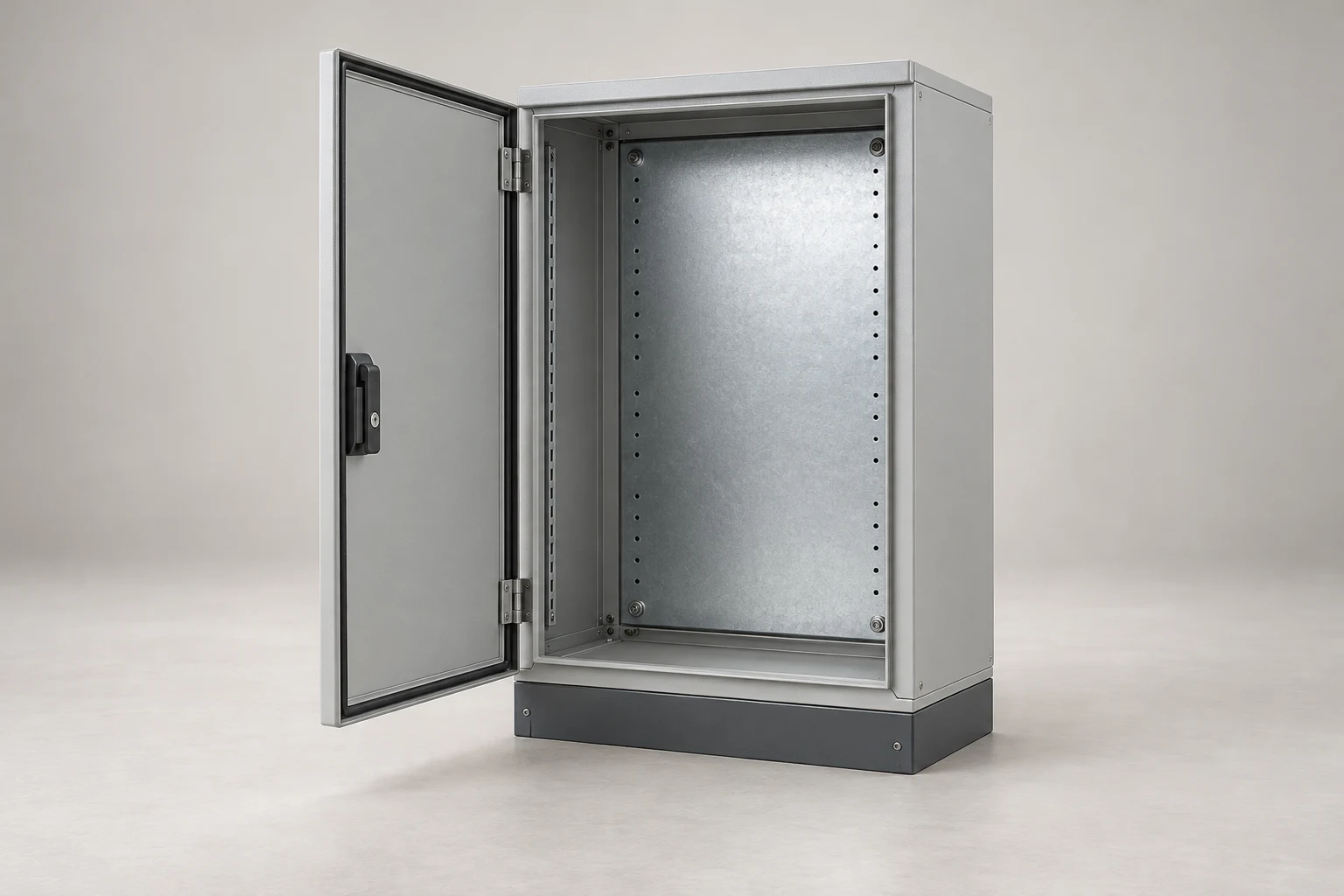
Unlike a floor-standing enclosure, it is carried by a rear fixing surface instead of a free-standing body on the floor.
Unlike a wall-mounted enclosure, free-standing installation, side-by-side modules and front and rear access options come first.
Unlike a floor-standing enclosure with only a vertical door surface, it includes a control desk dedicated directly to operator use.
Choose a product: a large image, product specifications, material options and technical project information open on one page.
Image & specifications ↗Energy and automation enclosure bodies are created around the hardware layout and the access arrangement on site.
Product image and specifications →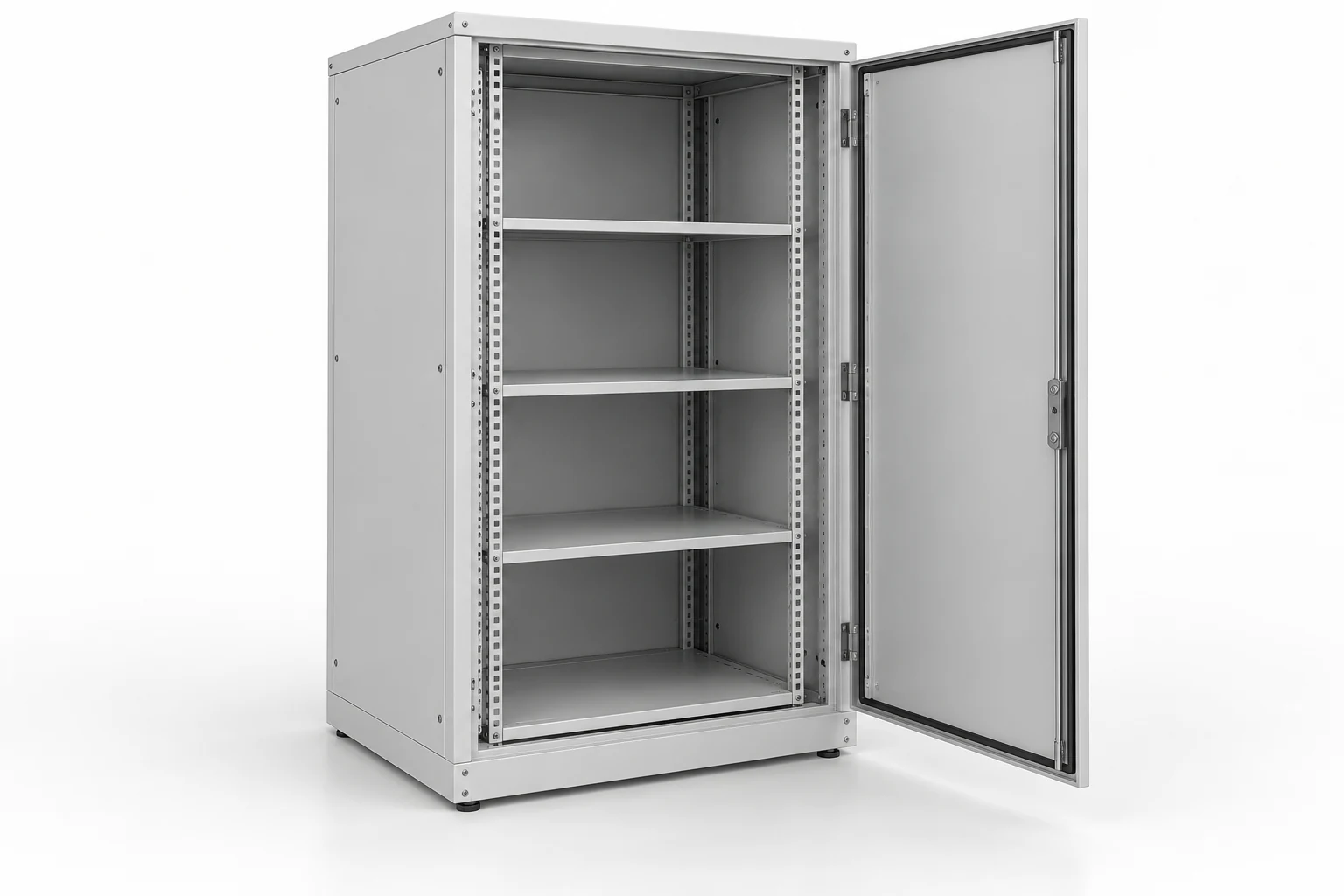 Image & specifications ↗
Telecommunications enclosures organise the mechanical layout of communications hardware and cable access.
Product image and specifications →Image & specifications ↗Cabinets in solar and wind applications are designed as mechanical enclosures that carry the equipment of the energy system.
Product image and specifications →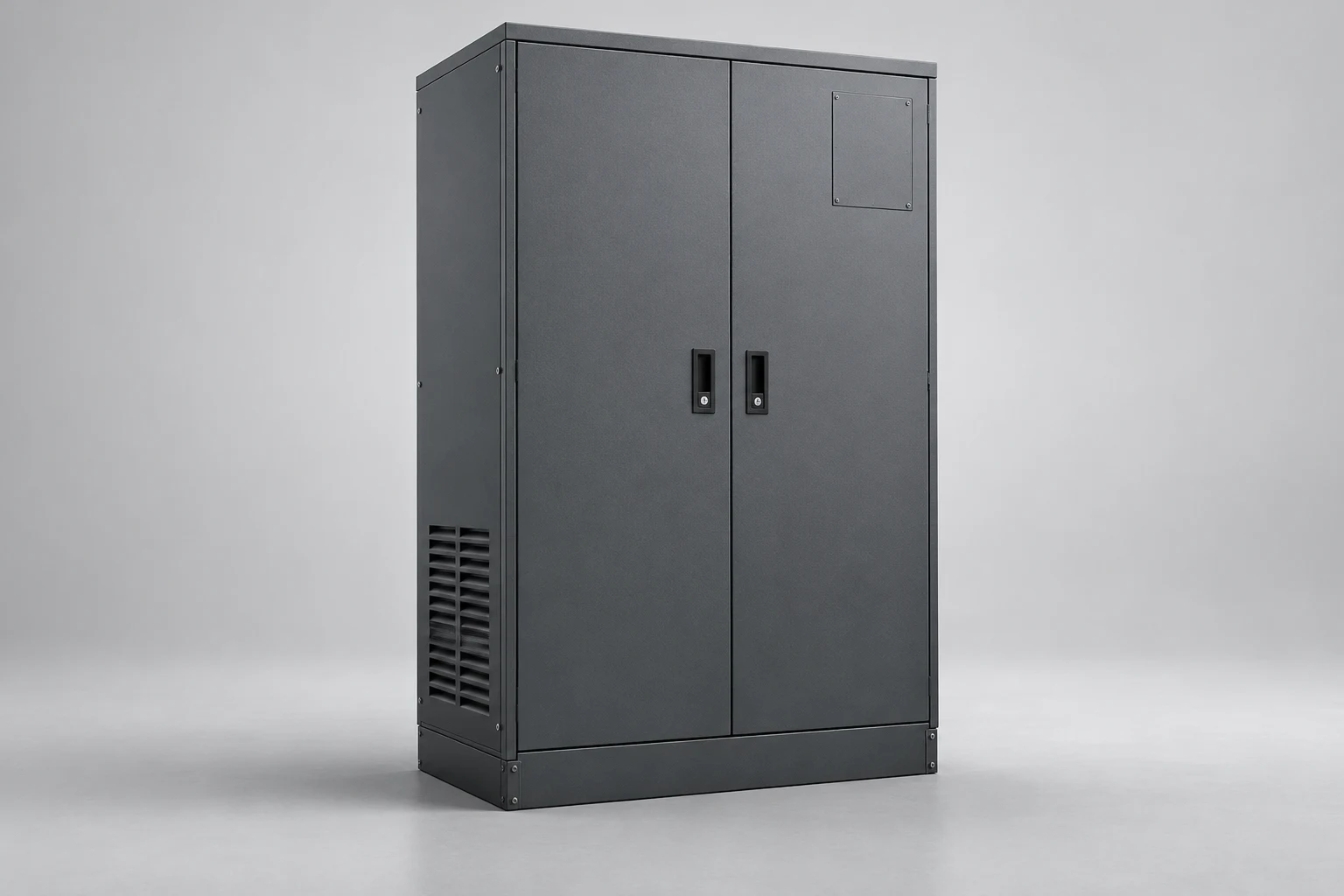 Image & specifications ↗
Outdoor transformer substation cabinets handle equipment access and the mechanical connection to the site together.
Product image and specifications →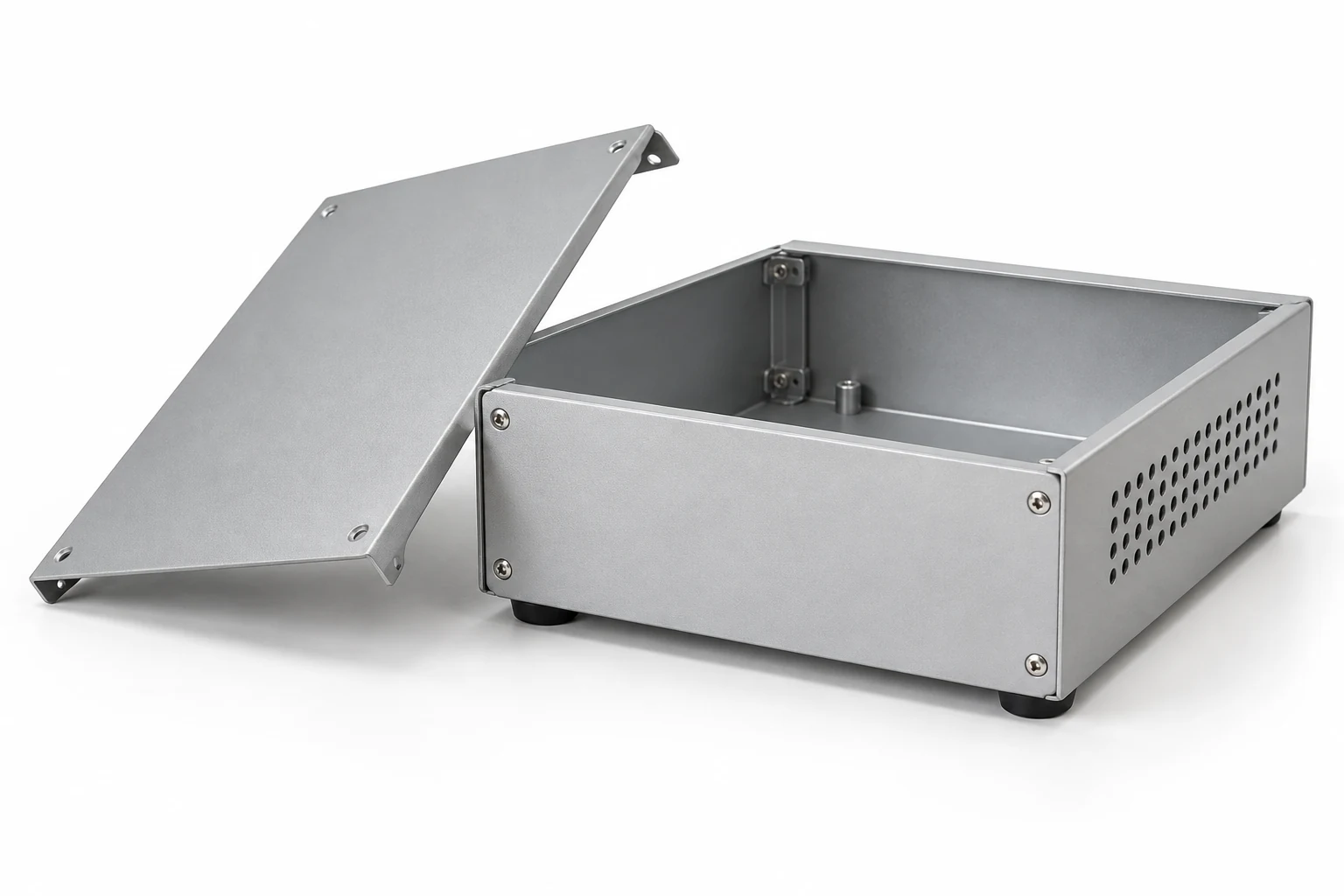 Image & specifications ↗
In cabinets with screens or for acoustic purposes, the visible interface and the internal enclosure requirements are assessed in the same body.
Product image and specifications →Image & specifications ↗Stainless enclosure bodies handle the mechanical layout of electrical hardware together with the material and finish expectations.
Product image and specifications →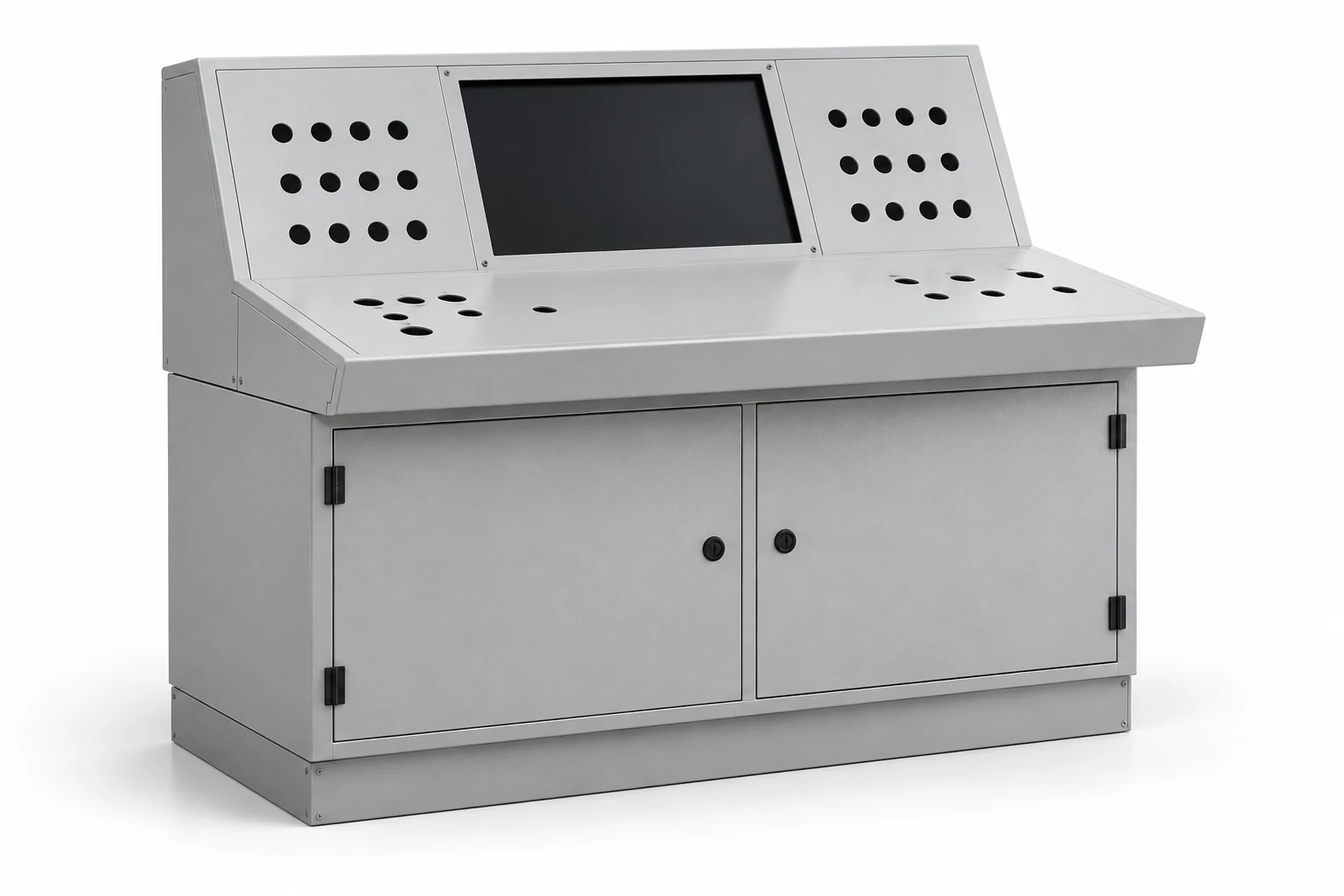 Image & specifications ↗
Marine console cabinets bring screens and controls together on a metal operator surface.
Product image and specifications →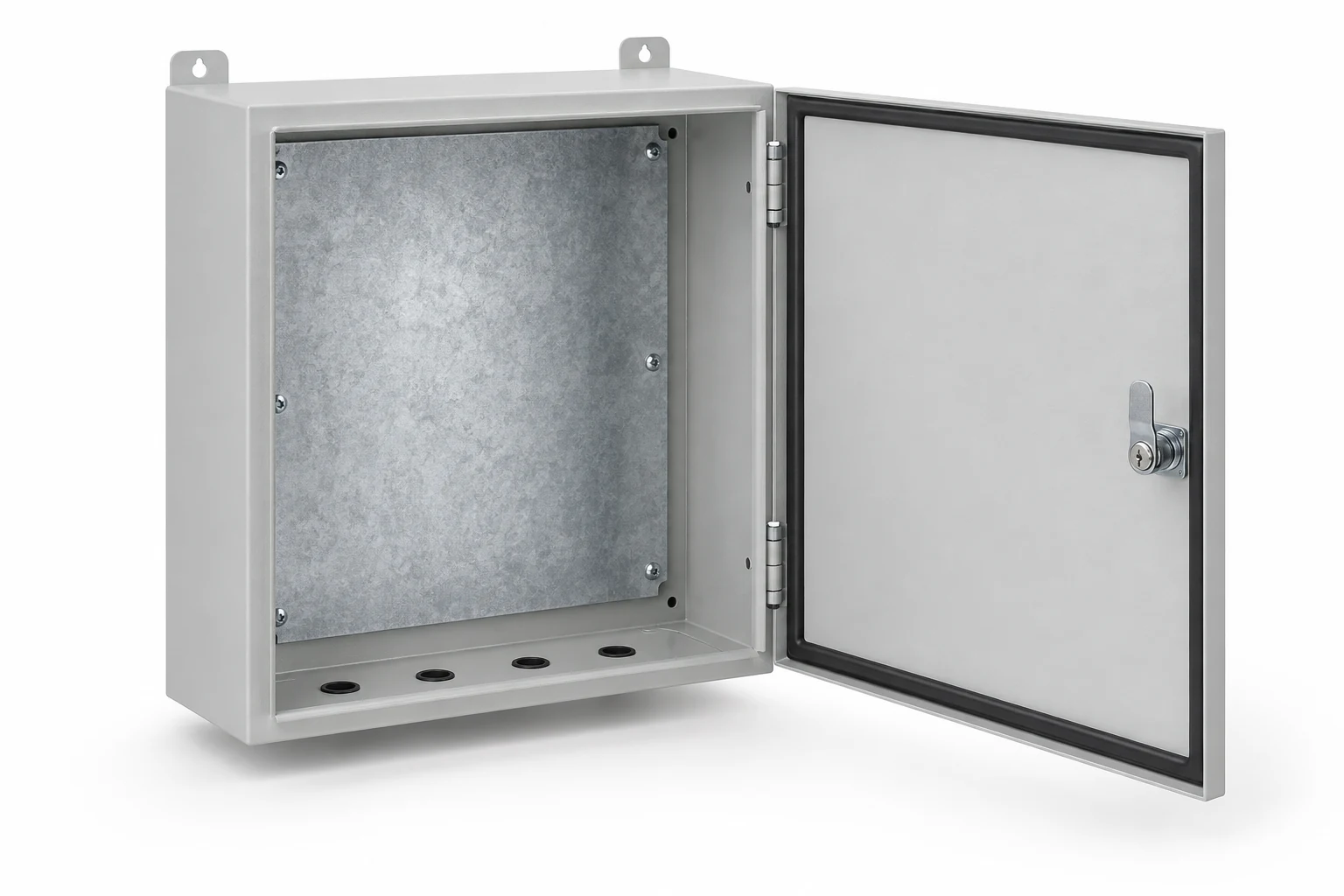 Image & specifications ↗
An enclosure body that arranges hardware in a metal housing suitable for wall mounting.
Product image and specifications →Image & specifications ↗Supporting frame, door and panel layout for floor-standing enclosure systems.
Product image and specifications →Image & specifications ↗A metal console with an inclined surface that organises the operator's access to screens and controls.
Product image and specifications →Image & specifications ↗A metal enclosure housing designed for temporary site layouts.
Product image and specifications →Dimensions, materials and hardware are set by the requirements of your project, not by a fixed catalogue standard.
Indoor or outdoor use, the mounting surface and exposure conditions are the starting inputs of the enclosure design.
Mounting plates, cable entries, door openings and the internal equipment layout are planned on the project.
Hinge, lock, gasket and connection details are assessed against the expected use and protection.
Wall-mounted, floor-standing or operator console forms can be considered according to the equipment layout and access requirements.
Manufacturing a metal enclosure body is not the same scope as an electrical design or a fully equipped switchboard. Protection class and test requests are assessed separately.
The use scenario, drawings, interfaces and expected appearance are reviewed together.
Cutting, bending, welding and finishing operations are planned in the order that suits the product geometry.
Parts are assembled within the agreed scope; dimensions and assembly fit are checked.
Outdoor conditions, internal equipment layout, door and lock system, cable entries and mounting surface.
Any technical drawings, 3D models, target quantity and requested delivery schedule help us assess the scope.
Prepare your project brief ↗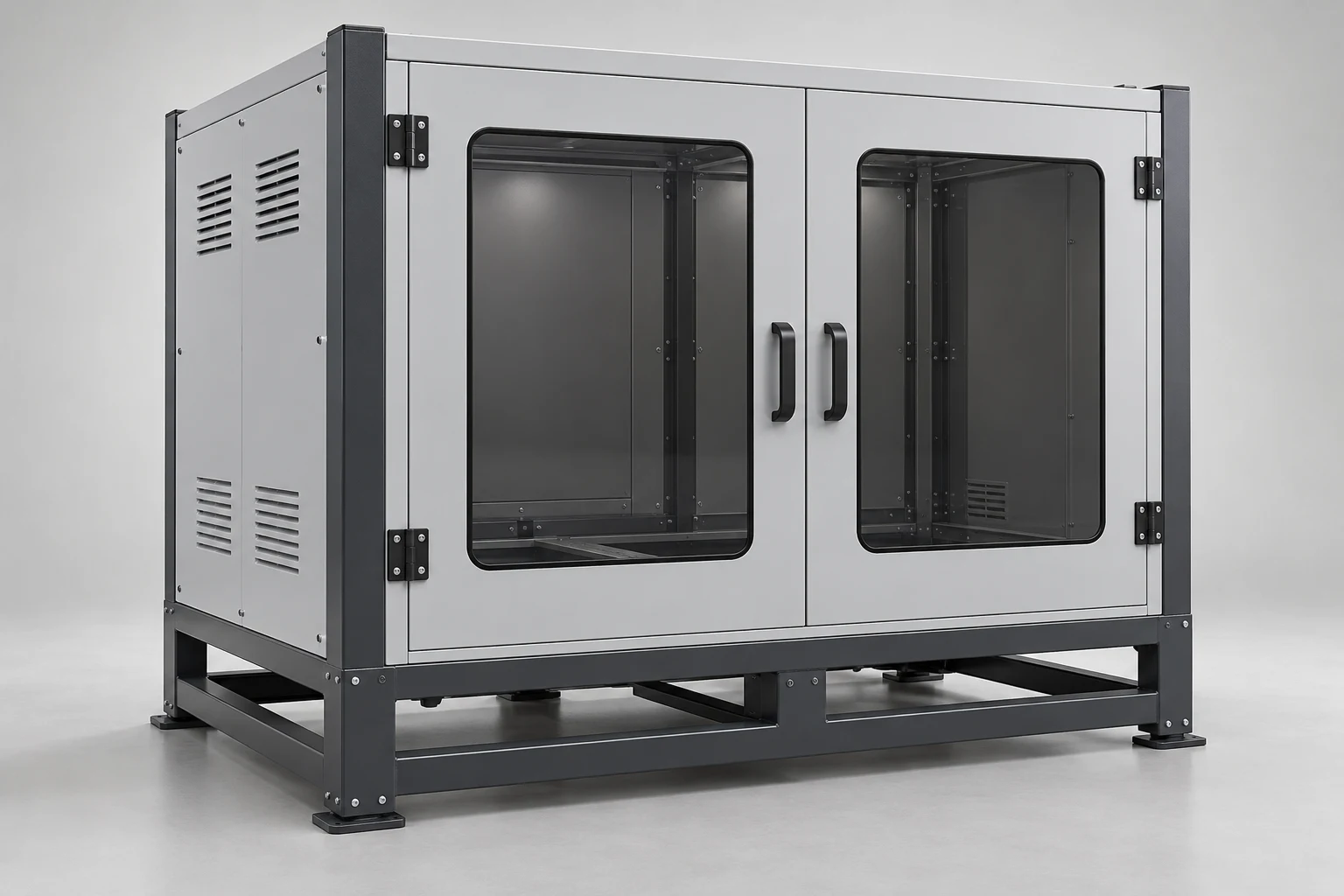
Around your machine we create not just a body but the right layout and access.
View product family →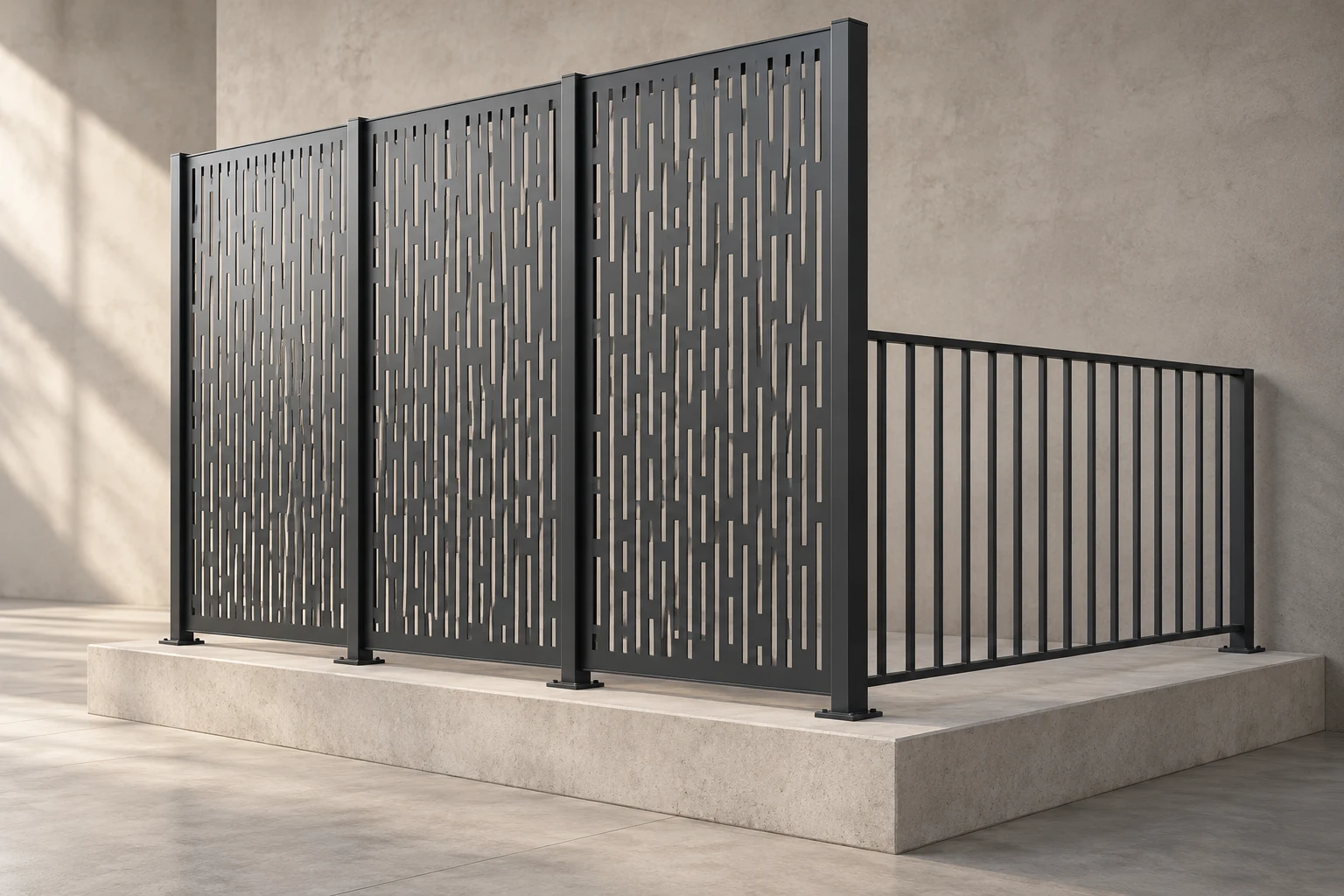
Metalwork beyond standard products, developed for the geometry and function of your project.
View product family →
Railing systems that complete the lines of a space.
View product family →