Where it is used
Creates the metal frame, supports and hardware connection interfaces for sliding door leaves carried by automation hardware.

For automatic or sensor-operated sliding door projects we handle the metal mechanical structure and the hardware interfaces. Leaves, frames and supporting details are developed together with the technical inputs of the automation system.
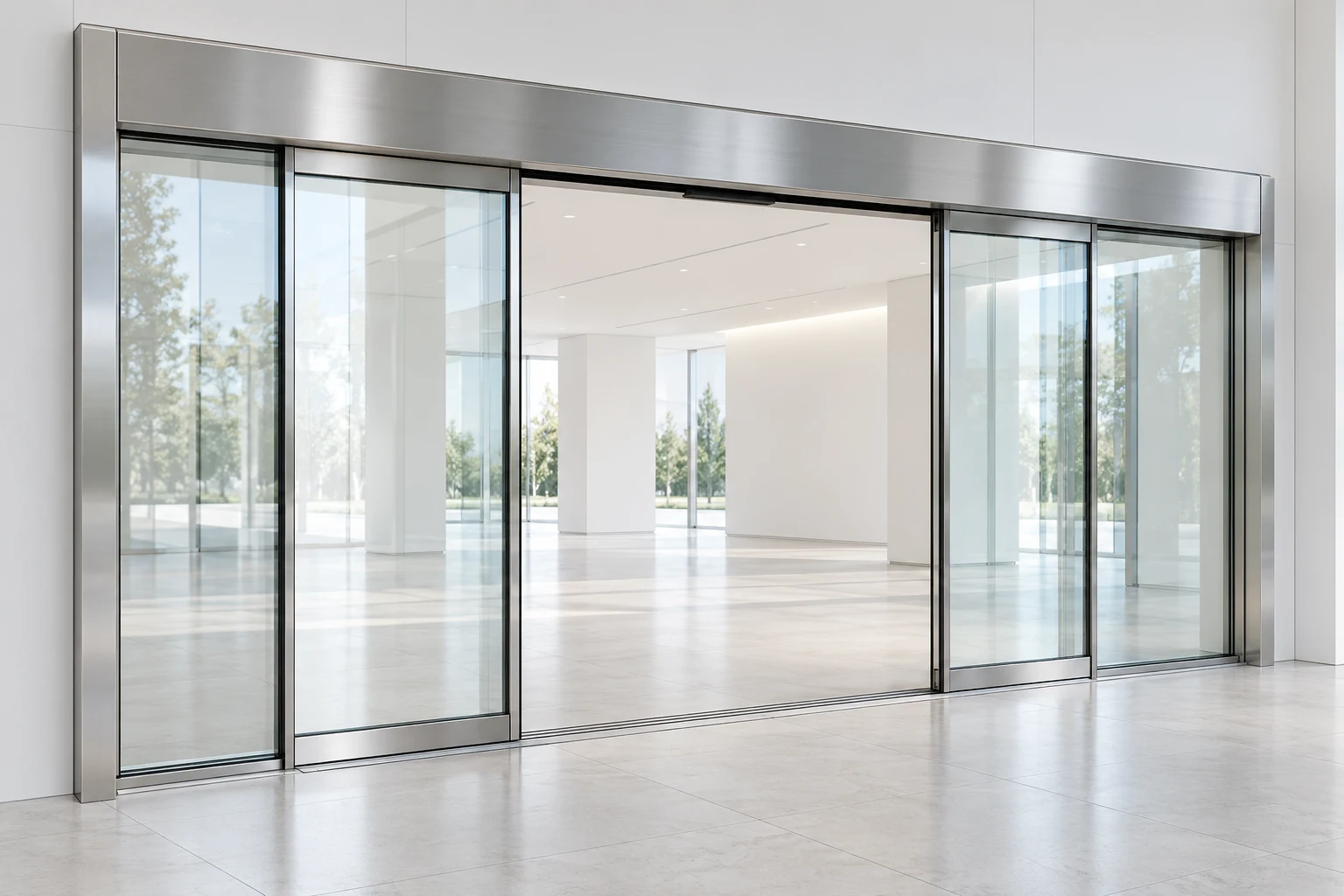
Creates the metal frame, supports and hardware connection interfaces for sliding door leaves carried by automation hardware.
Unlike a manual sliding door, the mechanical body is matched to the mounting data of the motor, sensors and control system; the automation hardware is a separate scope.
How the product is built and its project-based options. Exact dimensions and materials are defined in the technical review.
| Product / application type | Automatic / sensor-operated sliding door projects |
|---|---|
| Body and main components | Sliding metal leaf frame, glass / infill and track interfaces |
| Material and finish options | Steel / stainless sheet and section options; material grade and thickness are set by the project requirements. |
| Connections and use | Clear opening and movement area; automation is defined separately |
| Dimensions and configuration | Made to measure; width, length, height, sections and quantity are confirmed in the technical review. |
The image is a representative concept. Dimensions, materials and delivery scope are defined per project.
The key choices when adapting the product to your application.
The stacking space of the leaf, the clear passage and the obstacles around it are assessed on the layout drawing.
Mounting dimensions of the track, motor, sensors and control unit are taken from the relevant system supplier.
Opening of covers, adjustment points and space for replacing equipment are planned in the mechanical design.
Not every detail needs to be ready at the start. Along with existing drawings and dimensions, you can also note the points that are still open.
Project preparation guide →The drawing revision, target quantity and planned timing help assess the scope. You do not need to upload confidential files.
Motor, sensors, control, commissioning and verification of movement safety are defined separately; manufacturing the metal body is not automation certification.
Material, finish and assembly decisions are clarified from the drawings and conditions of use. The choice of operations and the form of delivery are written into the quotation.
Material and finish decisions →Image & specifications ↗When choosing between sliding and hinged doors we consider the movement area and the way the door is used as much as the opening.
Product image and specifications →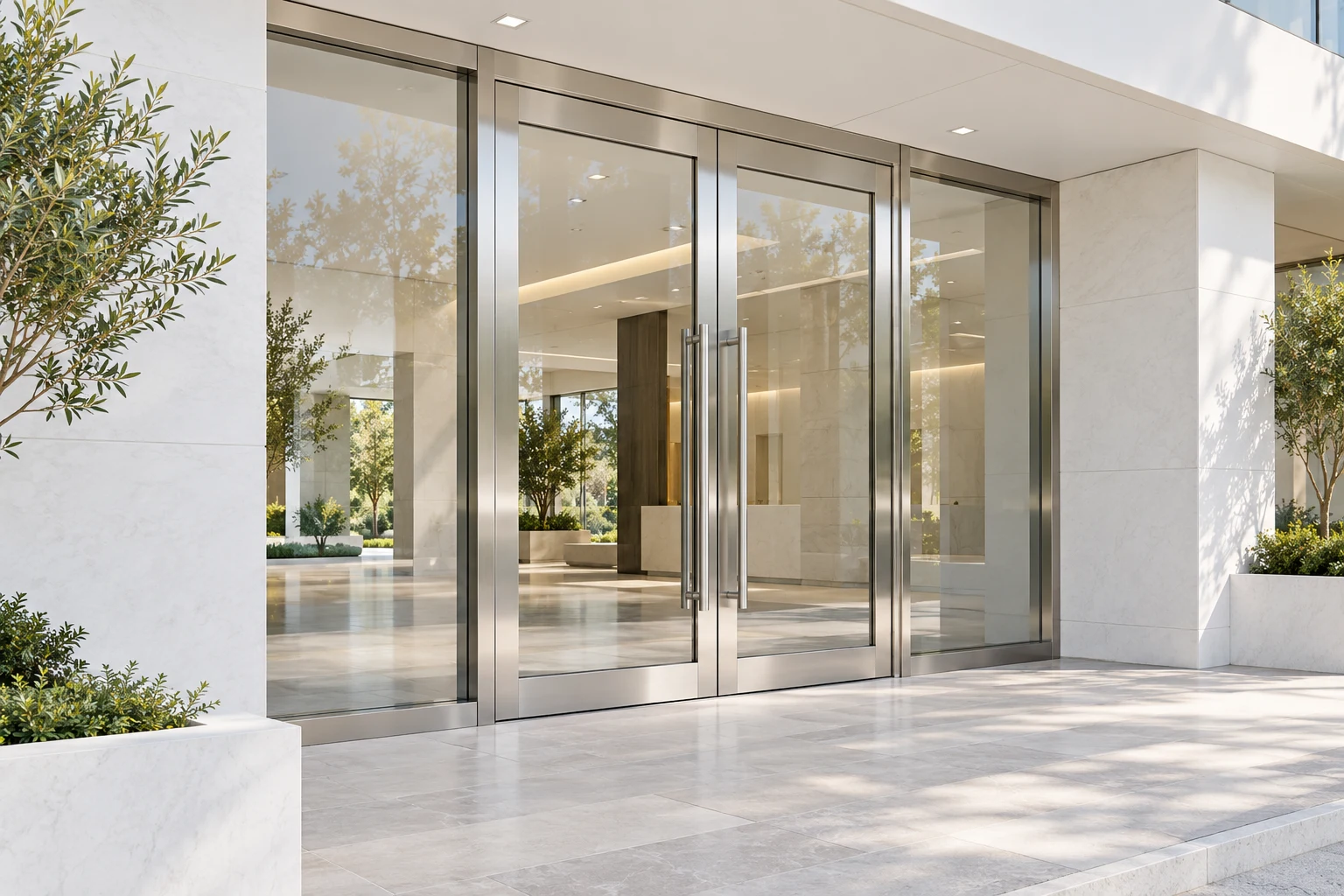 Image & specifications ↗
For shop and showroom entrances we design the metal frame together with the brand image and the flow of people through the entrance.
Product image and specifications →Image & specifications ↗For stainless doors and frames we handle the surface character, the profile lines and the joint details together.
Product image and specifications →